AI Projects and the Business Case Problem: Are We Funding Hype or Value?
With companies seeing lower-than-forecast returns on AI initiatives, we need to make sure we’re starting the right projects. Here’s how to keep your portfolio on track.
The industry mourns Robert “Max” Wideman, a beloved PMI Fellow, early leader in the PMI community, and trailblazer whose impact was deeply rooted in advancing project management knowledge.
Accountability is something that project managers and PMO leaders are very familiar with. But that doesn’t mean they always embrace it.
How often do project managers consciously balance our own lives? Drawing from his experiences in both the private and public sectors, this practitioner explores practical ways to sustain mental health and achieve genuine work/life balance in a high-pressure project environment.
No matter how much the definition had evolved, change management was still seen as something directly related to the project. But now, that’s changing. The idea of organizational change management has been moving closer to project-style change management for a while.
Today’s PMs face a world of complexity, shifting priorities and constant change. Tools and methodologies are not enough. Faro—Spanish for lighthouse—is a simple yet powerful model that reminds us to lead with fortitude, adaptability, relationships and purpose.
IntroductionIn the rapidly evolving world of data science and machine learning, practitioners constantly face a critical trade-off: achieving high model performance while maintaining model interpretab ...
IntroductionArtificial Intelligence (AI) is rapidly reshaping the way organizations operate, offering powerful tools for automating processes, making predictions, and uncovering insights from data. Ho ...
IntroductionAs artificial intelligence (AI) becomes integral to modern products and services, development teams face mounting pressure to deliver innovative features rapidly. The excitement around AI ...
As artificial intelligence (AI) becomes integral to modern products and services, development teams face mounting pressure to deliver innovative features rapidly. The excitement around AI capabilities ...
What Distinguishes Intelligent Decisions from Wise Decisions?Modern organizations increasingly celebrate intelligence.They invest in data.They invest in analytics.They invest in forecasting.They inves ...
In 2026, information overload has become a major distraction in project management, intensified by AI’s constant data generation. While AI accelerates insights, it also floods teams with alerts, dashb ...
IntroductionIn the world of Agile delivery, teams strive to achieve rapid, high-quality results through iterative development, collaborative work, and continuous improvement. Agile frameworks, such as ...
What signals help you tell different kinds of AI work apart—and what tends to go wrong when everything gets lumped together?Have you ever been in a conversation where “AI” meant different things to di ...
Visit ProjectManagement.com for a full day of live learning, practical takeaways, and on-demand resources to help you build AI confidence—and earn PDUs along the way.
With companies seeing lower-than-forecast returns on AI initiatives, we need to make sure we’re starting the right projects. Here’s how to keep your portfolio on track.
The industry mourns Robert “Max” Wideman, a beloved PMI Fellow, early leader in the PMI community, and trailblazer whose impact was deeply rooted in advancing project management knowledge.
Accountability is something that project managers and PMO leaders are very familiar with. But that doesn’t mean they always embrace it.
GenAI adoption depends on sustained alignment across levels of project work, rather than on isolated technological enhancement. A framework sets out three levels that must move together.
Business acumen is often framed as something that is possessed. It is described as something that you have, or you do not. Not only is this notion incomplete, but it is a dangerous one. It presents business acumen as a tangible something to be acquired, a checkbox to be attained, finite and specific.
Today’s PMs face a world of complexity, shifting priorities and constant change. Tools and methodologies are not enough. Faro—Spanish for lighthouse—is a simple yet powerful model that reminds us to lead with fortitude, adaptability, relationships and purpose.
AI can appear so lifelike, so helpful, and so available. Just make sure you are keeping emotional intelligence at the forefront and not letting the self-centeredness of AI weaken your EI skills.
Join award-winning leaders from PMI as they discuss how project managers can drive meaningful outcomes through inclusive collaboration, stakeholder engagement, and strategic influence. Explore practical ways to build trust, encourage diverse perspectives, and expand access to the project management profession.
Learn how storytelling enables project professionals to do — and why narrative is a core project leadership skill, not a soft one.
This webinar explores the alignments and differences between product and project management. The contributions of each to delivering effective solutions is explored, and where there are overlaps and gaps. In particular, the ways that they can complement each other are explored, as well as the cautions that practitioners should keep in mind.
In this interview, Yannick Carriou, CEO of Médiamétrie, defines enterprise agility as the ability to keep adapting while staying grounded in a clear value proposition. He argues that organizations should replace long planning cycles with faster decisions made closer to the work and more frequent reassessment of priorities and value. He also says leaders must move beyond command-and-control, foster psychological safety for experimentation and mistakes, and embed learning across the organization. Ultimately, he presents enterprise agility as a practical way to navigate uncertainty by facing reality, challenging assumptions and aligning work to changing market needs.
In this interview, Sagar Kochhar discusses enterprise agility as an organization's ability to sense change early, make decisions quickly and execute at scale without losing alignment. Drawing on Rebel Foods' evolution from a single-brand restaurant business into a global internet restaurant platform, Kochhar explains that agility is not about speed alone but about combining adaptability with a clear strategic direction. Organizations must be willing to challenge their own assumptions, disrupt successful business models and continuously evolve in response to changing customer behaviors, technologies and market dynamics.
This content is from PMI. It is not PDU Bearing Path to PMP: 2026 PMP Exam Change provides aspiring PMP® certification holders with a practical, forward‑looking overview of the updated PMP exam launching on July 9, 2026. This session breaks down why the exam is changing, what’s new in the updated content outline, and how candidates should adapt their study plans to stay on track. Attendees will walk away with clarity on what to expect next and how to prepare with confidence for the next generation of the PMP exam.
In this conversation, agile pioneer and Agile Manifesto co-author Jim Highsmith reflects on the evolution of agility from software development to the enterprise level. He argues that enterprise agility is not simply about responding to change but also about shaping it, requiring organizations to develop strong sensing capabilities, embrace continuous learning and build leadership judgment. To achieve it, organizations must move from a mindset of control toward one of learning and adaptation. He also explores the role of AI as both a driver of disruption and an enabler of faster learning, while stressing that human judgment remains essential in navigating uncertainty and leading transformation.
In today’s complex project environments, professionals must deliver results while managing competing priorities, stakeholder pressure, and limited authority. Yet many struggle to push back effectively without damaging relationships or credibility.
|
"Words are, of course, the most powerful drug used by mankind." - Rudyard Kipling |
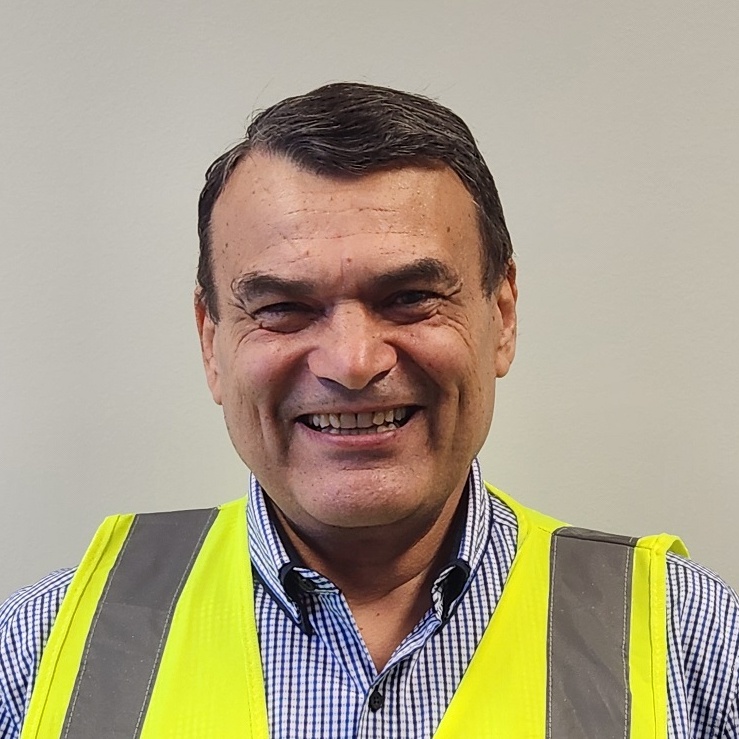
Community Champion